

Weekly Market Review - 18 May 2026
Global equities were pressured through the week as ongoing geopolitical tensions saw bond yields rise sharply. Technology stocks were pressured, as investors rotated in energy and sectors, which look set to benefit from rising bond yields.

US: Inflation came in ahead of expectations seeing bond yields rally higher
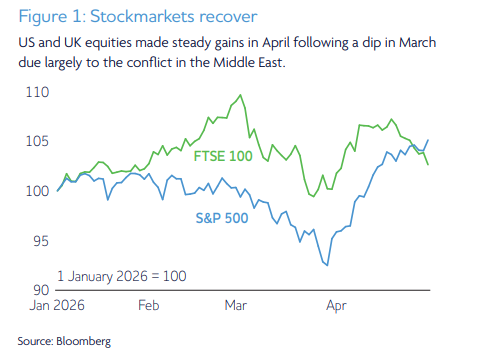
Most major U.S. equity indices ended the week lower as strong momentum in large cap technology and AI names was outweighed by renewed inflation concerns, rising bond yields, higher oil prices and ongoing geopolitical risks. The S&P 500 briefly reached a record high before pulling back to finish the week broadly flat, with energy leading gains while consumer discretionary, real estate and materials lagged.
Inflation data reinforced the challenge for the Federal Reserve, with headline Consumer Price Index (CPI) data rising 0.6% month on month and 3.8% year on year, and core inflation also coming in above expectations. Producer prices surged, highlighting persistent pipeline pressures largely driven by energy.
US Treasury bond yields rose, with the 10-year reaching approximately 4.6%, reflecting expectations that interest rate rises remain on the agenda. Retail sales were steady but showed some moderation, while jobless claims ticked slightly higher, suggesting a still resilient but gradually cooling consumer backdrop.
Japan: Bond yields hit highest level since 1997 amid growing expectations of a rate hike
Japanese markets delivered mixed performance, with the Nikkei 225 declining while the broader TOPIX index advanced as investors rotated away from semiconductor and AI names into financials and value sectors supported by higher bond yields. Rising oil prices raised concerns about import costs and consumer spending, given Japan’s reliance on energy imports.
The yen weakened further against the dollar despite the 10-year Japanese bond yield reaching its highest level since 1997 amid growing expectations of a rate hike. Economic data showed increasing cost pressures, with input prices rising strongly, while household spending fell more than expected, highlighting ongoing strain on consumers.
China: No major policy breakthroughs at Trump Xi summit
Chinese equities ended the week slightly lower as early gains linked to the Trump Xi summit and strong data faded. The meeting reinforced expectations of stable relations, with commitments to continued dialogue and trade cooperation, though no major policy breakthroughs were delivered. Economic data showed resilience, with services activity strengthening and exports rising strongly, supported by both external demand and domestic activity. Inflation picked up, particularly at the producer level, driven by commodity prices and AI related investment demand, reducing expectations for near term policy easing.
Europe: Ongoing geopolitical tensions outweigh robust earnings
European equities declined over the week despite broadly solid corporate earnings, as geopolitical tensions continued to weigh on sentiment. Germany’s DAX closed 1.59% lower, Italy’s FTSE MIB fell 0.35%, and France’s CAC 40 Index declined 1.97%. Concerns around stalled U.S. Iran talks added to fears of renewed inflation pressure and tighter monetary conditions.
Economic data was mixed, with eurozone industrial production rising modestly but missing expectations as weakness in energy and consumer goods offset gains in capital and intermediate goods. France saw unemployment rise to 8.1%, the highest since 2021, highlighting labour market fragility.
UK: Political instability and subdued demand adds to caution around UK outlook
UK equities pulled back slightly, with the FTSE 100 edging lower amid political uncertainty and weakening retail data. Pressure on Prime Minister Keir Starmer intensified, contributing to softer investor sentiment and some weakness in the pound. On the economic side, retail sales fell 3.0% year on year in April, well below the longer term average, pointing to continued pressure on consumer spending. UK business investment growth was up 11% in the first quarter of this year relative to the fourth quarter of 2019 (before the pandemic). This growth is less than half the pace of the 28% rise in US non-residential private domestic investment over the same period.

What's Important This Week: 18 May to 22 May 2026
UK Inflation Data
On Wednesday, the latest UK Consumer Price Index figures are released.
Why it's important
UK inflation climbed to 3.3% in March, up from 3% in February, the highest reading in three months. The increase was driven largely by transport costs, with motor fuels rising 4.9% as the war in Iran pushed pump prices sharply higher. Domestic heating oil surged over 95%.
The Bank of England has flagged that CPI is likely to sit between 3% and 3.5% through the second and third quarters of 2026. Some forecasters now expect inflation to rise above 4% by autumn.
This release matters for several reasons. It tells the Bank of England how quickly energy costs are feeding into broader prices. It tells households how much real pressure they're under. And it tells markets whether the Bank can hold rates at 3.75% or may be forced to consider a hike.
One MPC member voted for a 25 basis point increase in April. Another stronger inflation print could shift the balance further.
Japan Inflation and the Bank of Japan
Japanese Consumer Price Index data is also due later in the week.
Why it's important
The Bank of Japan held rates at 0.75% at its late April meeting but lifted its core inflation forecast for fiscal year 2026 sharply to between 2.5% and 3%. That's a significant move from a central bank that spent decades fighting deflation.
Japanese inflation rose 1.5% year on year in March, with core at 1.8%. April's release is expected to show core holding around 1.8%. Anything firmer raises the probability of a rate hike to 1% as early as June.
This matters beyond Japan. The yen has been a low-cost funding currency for global investors for years, used to finance higher yielding investments elsewhere. As Japanese rates rise, that trade becomes less attractive. Capital may flow back to Japan, with knock on effects for asset prices in markets that have relied on those flows.
US Treasury Secretary Scott Bessent met Japanese officials last week, with the yen and policy coordination on the agenda. Any read across from that meeting alongside this inflation print will be watched closely in currency market
This update reflects Omnis’ view at the time of writing and is subject to change. The document is for informational purposes only and is not investment advice. We recommend you discuss any investment decisions with your financial adviser. Omnis is unable to provide investment advice. Every effort is made to ensure the accuracy of the information, but no assurance or warranties are given. Past performance should not be considered as a guide to future performance.

Comments